

Sizing a treatment plant starts with measuring: real flows, seasonal peaks and planned growth.
Water team · 4 min read
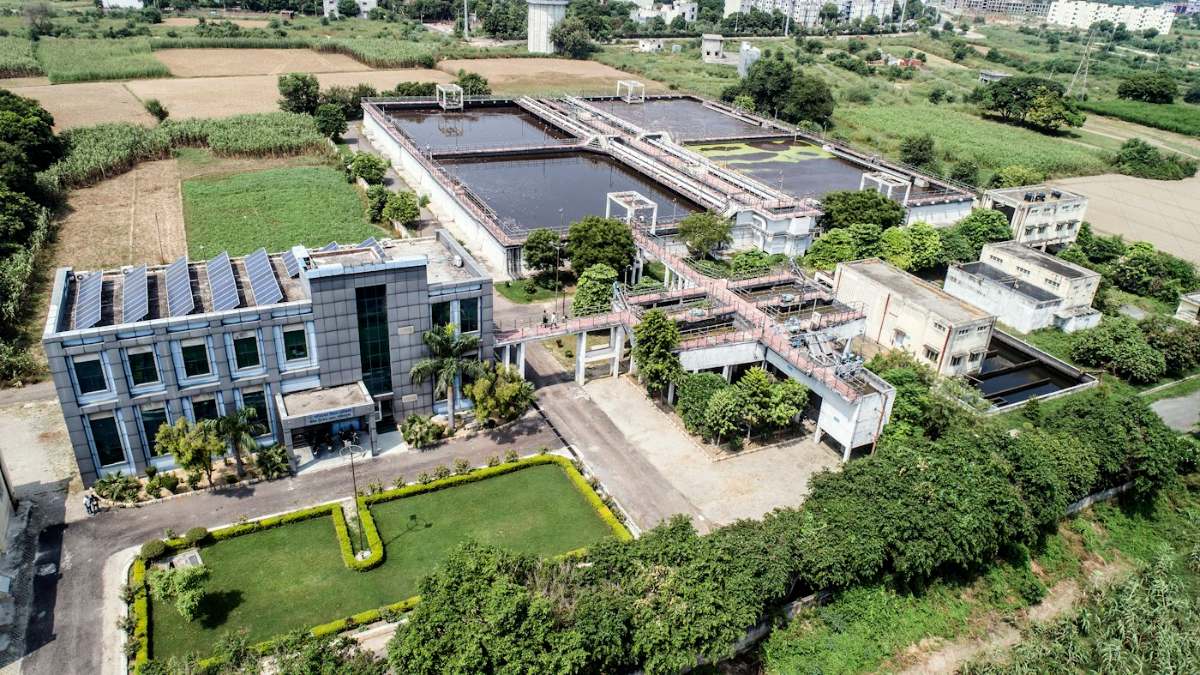
In a small village, the temptation is to size the treatment plant from the usual tables: so many inhabitants, so many litres per person per day. In Fontanelles, Muntanyola, we chose to measure first. What we found changed the technology we selected.
What you see
Fontanelles is a second-home neighbourhood with no treatment: its wastewater ended up in two streams. It has about 224 residents in winter, over 330 in season and planning capacity for 660. On paper, a small plant and a sewer.
What you don’t see
A population that changes so much doesn’t produce constant wastewater. So in July 2024 we ran a two-week sampling campaign, on weekdays and holidays. Before drawing a single pipe, we also surveyed 1,200 m of street and the 16 existing manholes.
With real data, the question stops being ‘how much water’ and becomes ‘how much it varies’. That is what decides the technology.
The solution
We compared three options and chose rotating biological contactors, the most robust against changes in temperature and flow. The plant treats 350 population equivalent, with the site ready to grow to 700. The 901 m sewer runs by gravity under the street, with no pumping station to maintain.
The result is an effluent with BOD5 below 25 mg/l, suspended solids below 35 mg/l and COD below 125 mg/l — and a plant designed for the water that actually arrives, not the water in a table.
Got a treatment plant that’s outgrown its capacity? Let’s talk.
Contact